

This year, on March 8th, Uganda will join the rest of the world in celebrating International Women’s Day under the theme “Give and Gain.” which was chosen to encourage a mindset of support, mentorship to women to make them leaders. Emerging from the early 20th-century labour movements, International Women’s Day was established to recognize the social, economic, cultural, and political achievements of women and characterized by celebrations mode the globe.
However, beyond the celebrations, speeches, and recognition of achievements, a sobering reality remains. In many of our communities, women continue to bear the heaviest burdens of development decisions made far from where they live. Large-scale projects such as oil extraction, mining, infrastructure expansion, and land acquisitions often disrupt livelihoods, increase economic vulnerability, and place additional pressures on women who already shoulder significant responsibilities for household welfare, food security, and natural resource management.
Across East Africa, oil and gas projects have had profound and lasting consequences on women’s rights, livelihoods, and gender equality, exposing deep gaps between development promises and lived realities.
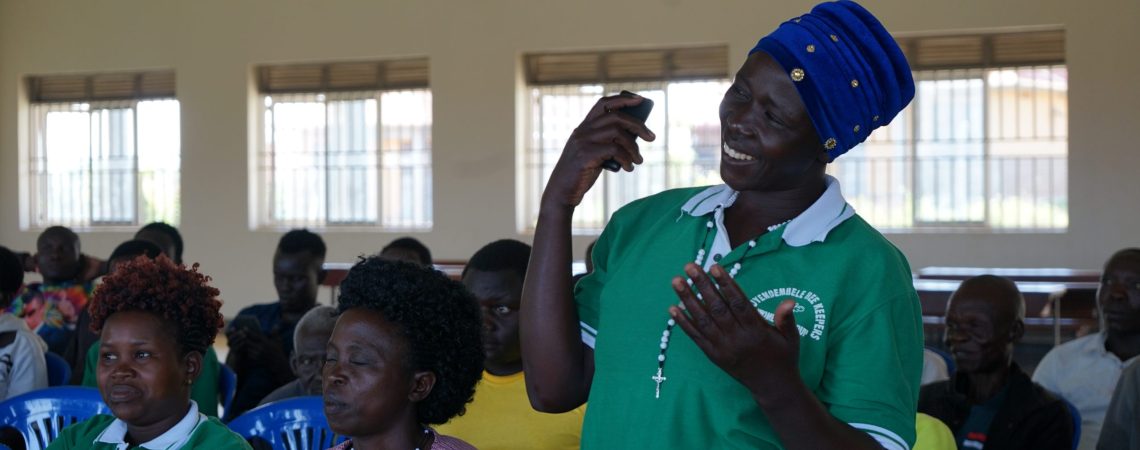
Despite repeated claims of women’s empowerment by oil and gas companies, evidence from the project affected persons tells a different story. “Because women were sidelined from the compensation process that also took so long, many families were forced to borrow money just to survive. By the time the payments finally came, a large portion had already been consumed by loan repayments and accumulated interest, leaving very little for the households. This situation created serious stress in many homes, leading to conflicts between spouses and, in some cases, family breakdown. Before the project began, such tensions were far less common,” explained by Rachel , a community member from Hoima district
Large scale projects such as the East African Crude Oil Pipeline which includes the world’s longest heated oil pipeline ,Tilenga project ,Kingfisher oil developments have resulted in approximately 2,740 acres (1,109 hectares) acquisition of land for the pipeline corridor and associated infrastructure. This land acquisition affects 10 districts, 25 sub-counties, and 171 villages, displacing 3,762 project-affected persons
The East African Crude Oil Pipeline (EACOP) project, along with associated oil fields, has caused the displacement of over 120,000 people across Uganda and Tanzania. According to (UNDP Citation2015) , many of those displaced are subsistence farmers, a significant number of whom are women, whose lives and livelihoods are closely tied to land.
For women, land is not just a productive asset it is the foundation of food security, income, and family survival. Yet many women affected by oil projects report being relocated to land of poorer quality, severely limiting their ability to grow food for household consumption or produce for sale. In some cases, newly allocated land has been polluted by nearby oil activities, rendering it unsuitable for farming and further undermining women’s economic independence.
In oil-affected communities, women face heightened economic vulnerability due to compensation processes that often exclude them or fail to recognize women’s land use and ownership rights. Findings from the Human Rights Impact Assessment highlight how customary land systems in Uganda restrict women’s ability to own, inherit, or control land and its produce. These legal and cultural barriers leave women particularly exposed during compensation negotiations.
To protect themselves from these inequalities, women have raised concerns and proposed alternatives to existing compensation approaches. However, delayed or inadequate compensation has forced many households into debt, increasing poverty and placing an even heavier burden on women to provide care, food, and stability with little resources.
Oil expansion also sits at the center of the climate crisis, which disproportionately displaces women from their households. In late 2024, more than 30 families in Kasinyi village, Ngwendo sub-county, were reported to be facing severe displacement due to floods that residents claim are caused by, or worsened by, TotalEnergies’ oil exploration activities.
The impacts of oil projects extend beyond economic loss. Displacement, job insecurity, and social disruption have contributed to increased household misunderstandings , domestic violence, and community instability. Women and girls face risks of exploitation and abuse, while access to essential social services becomes more limited. These protection risks underscore the nature of oil developments and the urgent need for safeguards that prioritize women’s safety and dignity.
As we celebrate women, it is important to recognize that these impacts are not accidental. They begin from development projects that fail to respect human rights, gender equality, and meaningful community participation. Gender equality is a core pillar of the United Nations Sustainable Development Goals, particularly SDG 5, which calls for achieving gender equality and empowering all women and girls by 2030. The UN’s 2024 Pact for the Future further affirms that gender equality is an essential prerequisite for sustainable development and without it, no development goal can be achieved.
In spite of these global commitments, addressing the impacts of oil and energy projects has not been treated as a priority by governments and oil project partners. Women’s concerns remain inadequately addressed, even as they continue to bear the greatest costs.
This International Women’s Day, we call on the government, project developers, and financiers to place women affected by oil and gas projects at the center of development decisions. This means listening to and acting on their concerns through meaningful participation, ensuring fair and timely compensation, protecting women from displacement, violence, and economic marginalization, and investing in sustainable livelihoods that strengthen women’s economic independence. Development must respect women’s rights, safeguard the environment, and uphold climate justice because progress that silences women and destroys their futures is not development at all.
JOY NABULO
Environment Governance Institute

