

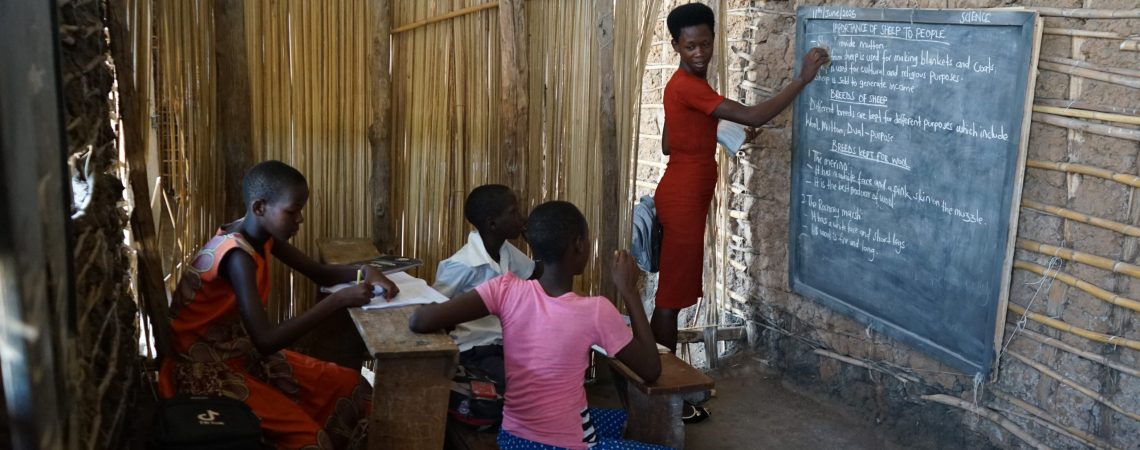

Kingfisher being one of Uganda’s multibillion-dollar oil and gas operations, operated by CNOOC Uganda Limited, impacts the local population especially children who are paying a heavy price. The most critical sector bearing the burden of these oil activities is education.
More than 500 children living in and around Buhuuka Flats face an uncertain future after oil operations by CNOOC disrupted their education amidst the rapid expansion of oil activities.
Buhuuka Parish, located in Zunzu B, Kikuube District, remains one of the most neglected and underserved communities in the Albertine region’s education sector. The area has recorded some of the lowest literacy rates, with the majority of children not attending school. Those who do often struggle due to a lack of basic scholastic materials such as books, pens, uniforms, and shoes
With oil-related disruptions cutting off traditional livelihoods like fishing and cattle keeping, families are no longer able to support their children’s education .
“We used to fish and pay school fees. Now we can’t even afford a book,” said one parent during a recent community engagement meeting with the Environment Governance Institute.
Mr. Baine Ben, the head teacher of Bright Star Morning School, the only primary school in Buhuuka, established in 2020 shared the struggles the school operates under stressing that despite the school charging a fee of UGX 50,000 per term, most parents cannot afford it.
“Out of 200 pupils, more than half are currently out of class because of unpaid fees,” Baine said. “We have eight teachers, but paying them is a challenge. We lack basic facilities, and every day, more children drop out.”
The head teacher further explained that most parents have lost their income sources due to the ongoing oil activities. Fishermen have been restricted or forced off the lake, cattle keepers have been displaced, and farmlands have dried up or been grabbed for oil infrastructure. There are no alternative income-generating activities, Parents are struggling even to buy pencils. And as a school, we are forced to solicit donations just to keep up,” Baine emphasized.
The education crisis is further worsened by militarized control of Lake Albert. According to a parent interviewed at Bright Star Morning School, soldiers confiscated his fishing boat because he could not afford to pay the illegal weekly fee imposed to access on lake Albert.
“My boat was taken because I couldn’t pay the fee of 200,000 shillings. It had been our family’s only source of income. Without fishing, I can’t pay school fees, and now my children stay at home.”
These fees, reportedly collected by soldiers without accountability or receipts, are part of a growing pattern of extortion and human rights violations. Confiscated boats are often burned or repurposed as firewood by soldiers, and victims are left without any means to appeal or seek justice.
Despite being located in an area heavily influenced by oil development and government presence, Buhuuka lacks even the most basic infrastructure. The parish does not have a secondary school, and the nearest one is over 30 kilometres away an unreachable distance for most rural children.
This has caused many girls to drop out of school due to the fear of being raped along the way and moving long distances while boys often abandon school to engage in fishing or collecting firewood for sell. Such a scenario deepens poverty and illiteracy, even as billions are invested in oil extraction just kilometres away.
The situation in Buhuuka reflects a true definition of an oil course and broader contradiction in Uganda’s oil development narrative where oil is extracted from the land, while the people within remain struggling and excluded from their rights. If urgent action is not taken, Buhuuka risks becoming a graveyard of lost futures sacrificed at the altar of oil extraction. The ongoing operations by CNOOC have already disrupted children’s education, displaced families, and eroded the community’s prospects for development. The people are witnessing their land’s wealth turned into their own poverty.
We call for an immediate suspension of oil activities in Buhuuka until an independent and comprehensive assessment of the social, educational, and environmental impacts is conducted. CNOOC and the government must be held accountable to fully compensate affected communities, restore disrupted livelihoods, and invest in long-term education and social services. Anything less would be a grave injustice to the very people whose land fuels this industry.


